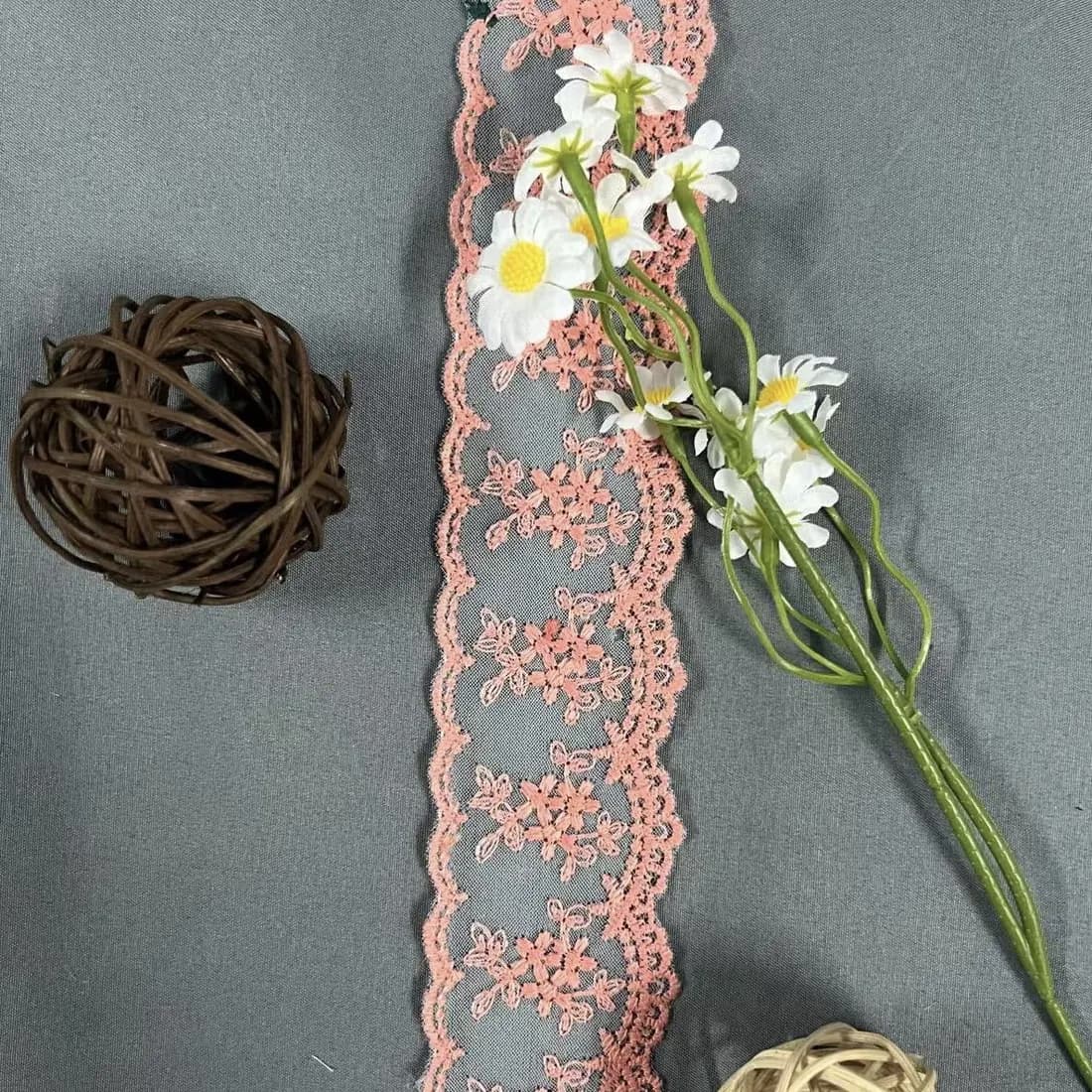
Compare white, ivory, champagne, blush and black bridal lace, and learn how fashion teams approve color across lace, tulle and gown fabrics.
Bridal color names are not universal standards
White, soft white, ivory and champagne can mean different shades to different mills, designers and markets. A name is useful for initial selection, but it is not precise enough for production approval. Always match lace against an approved physical swatch of the gown fabric.
The base and embroidery thread also affect the final appearance. Ivory thread on a white tulle ground reads differently from the same thread on nude mesh, especially where layers overlap on the bodice.
White, soft white and ivory
Bright white gives a crisp, modern contrast and can suit clean silhouettes or cool-toned palettes. Soft white reduces the blue cast that some bright whites show, while ivory introduces warmth without necessarily appearing yellow.
For a tonal gown, compare lace, lining, tulle and embellishment together. Pearls, sequins and backing yarns may each reflect light differently even when their color names match.
Champagne, blush and nude illusion tones
Champagne and blush create depth under ivory embroidery and are often used for vintage, romantic or illusion effects. Their appearance changes noticeably with skin tone, lining color and venue lighting, so a small isolated swatch is not enough for final approval.
Build a layered mock-up using the intended number of tulle and lining layers. Evaluate it in daylight, warm indoor light and photography conditions before confirming bulk color.
Black and alternative bridal lace
Black floral lace, deep green, brown and other non-traditional colors are increasingly relevant to alternative bridal collections. A colored gown can still read as bridal through motif scale, silhouette, train treatment and coordinated veil or accessory design.
Dark lace makes construction details more visible. Check thread sheen, mesh transparency, cut edges and any color difference between beads, sequins and embroidery before approving the design.
Match fiber and construction before custom dyeing
Color development starts with fiber content. Polyester embroidery, nylon tulle, cotton lace and mixed embellishments do not respond to color processes in the same way. Confirm the complete construction before requesting a custom shade rather than approving color on one component only.
If several lace qualities must coordinate in one dress, develop them as a group and identify an acceptable shade range. A technically identical formula may still appear different because surface texture and thread luster change how light is reflected.
Use a disciplined color approval workflow
Send a clean, labeled fabric swatch and specify which face is the approved side. Request a lace sample on the intended base, review it beside the lining and keep one signed reference for the supplier and one for the design team.
For bulk orders, confirm that production is compared with the approved reference and that different dye lots are identified. Reorders should refer to the original approval, but a fresh comparison is still necessary because materials and lots can vary over time.