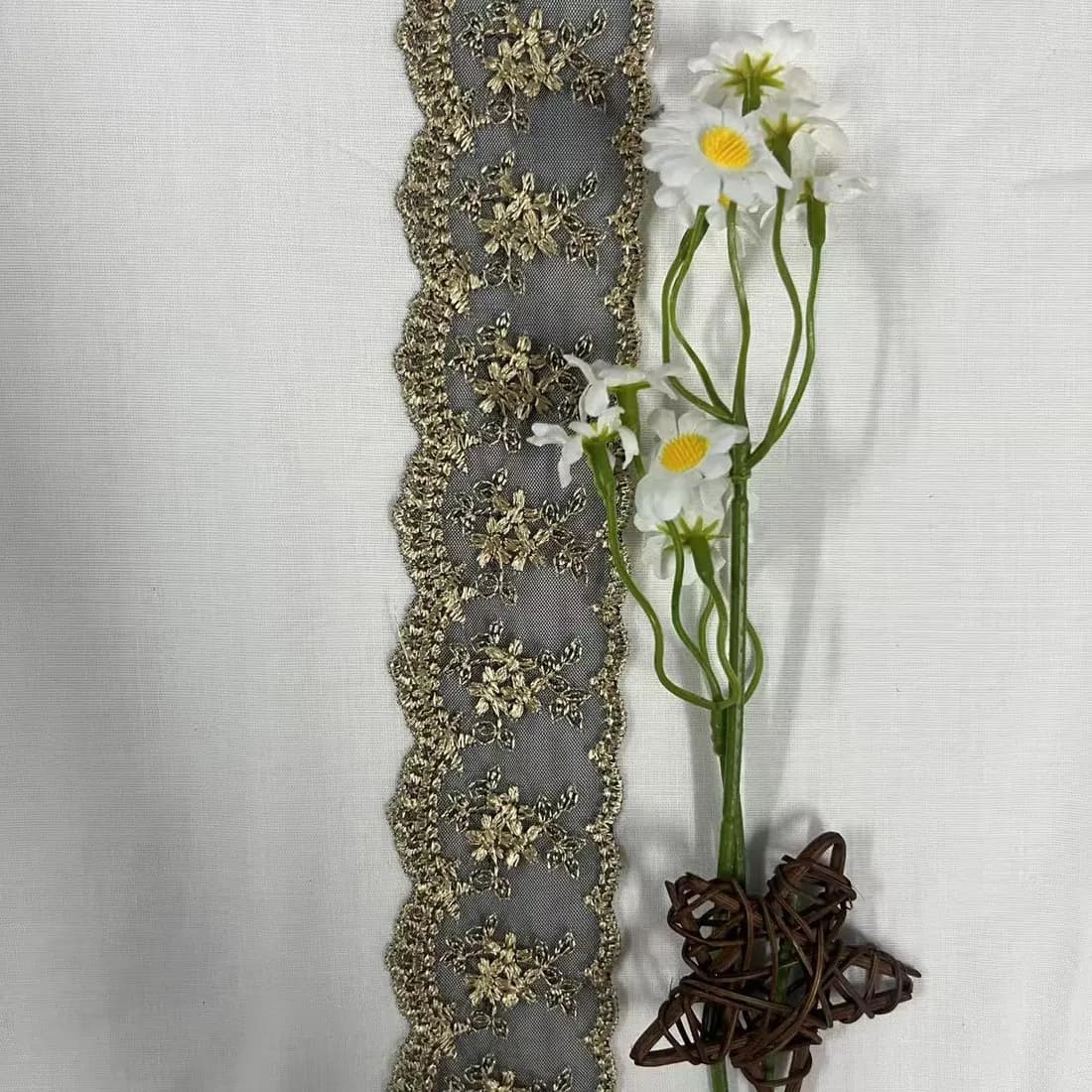
Use this lace quality control checklist to review color, dimensions, embroidery, edges, embellishment, packing and bulk consistency.
Define quality with an approved physical sample
Quality control needs a reference. Keep an approved lace sample with its construction, color, dimensions and sample code clearly identified. Product photos and written descriptions support the process, but they cannot replace the physical standard for hand feel, shade and workmanship.
Before bulk production, agree which characteristics are critical to the garment: softness at a neckline, stable width at a hem, mirrored applique pairs, clean scallops or secure bead attachment. Inspection should focus on the risks that matter to the final use.
Check motif, embroidery and base fabric
Compare motif shape, stitch density and thread direction with the approved sample. Look for skipped areas, loose threads, distorted mesh, holes, puckering and visible joins. On repeating trims, check that the transition from one repeat to the next is consistent.
Inspect the back as well as the face. A clean front can still hide rough thread ends, backing residue or construction that may irritate skin or interfere with sewing.
Measure width, repeat and applique orientation
Measure finished width and repeat using the points defined in the tech pack. For appliques, check overall dimensions, motif direction and left-right matching. For scalloped trims, confirm that the decorative edge and any sewing margin remain usable along the roll.
Review measurements at several positions rather than only at the roll end. Variation can appear after tension changes, joins or finishing processes.
Review color as a complete material system
Compare bulk lace with the approved swatch under consistent lighting and beside the actual garment fabric. Check the base, embroidery thread and embellishments separately because one component may shift even when the overall shade initially looks acceptable.
Identify production lots and avoid mixing visibly different shades in the same garment set. For matched appliques or neckline pairs, compare the pieces directly before packing.
Test edges, embellishment and sewing performance
Gently handle scallops, cutwork bridges and motif edges to identify weak points or unexpected fraying. Check whether beads, pearls, sequins and dimensional petals remain secure during normal handling and whether their reverse-side attachment is suitable for the garment.
Run a sewing trial on the intended fabric before approving the bulk lot. This reveals curling, stretching, needle damage, excessive stiffness and seam behavior that may not be visible during table inspection.
Confirm packing, labels and reorder traceability
Inspect roll or piece quantity, protective wrapping, labels and orientation. Delicate beaded lace may require separation so surface decoration does not catch on neighboring pieces during transport.
Record the supplier, style code, color, lot, inspection date and approved sample version. Traceability makes it easier to isolate a variation and gives the next reorder a clearer starting point.